

Thanks for listening to The Upstream Leader podcast. Busy season is behind us, which means we’ve officially entered what we at Upstream call development season: The time of year when firms can finally step back, invest in their people, and focus on building a stronger future. One of the best ways to do that is through HeadWaters, Upstream Academy’s Premier Leadership Conference designed for accounting firm leaders who want to think bigger, lead better, and connect with peers who are shaping the future of the profession. With inspiring speakers, practical insights and meaningful conversations,
HeadWaters is built to help your firm move forward with purpose. And this year is especially exciting as we celebrate the 25th anniversary of the HeadWaters Leadership Conference, marking 25 years of leadership, innovation, and impact across the profession. If your firm is ready to focus on growth beyond busy season, now’s the time.
Visit UpstreamAcademy.com to learn more and register. That’s UpstreamAcademy.com.
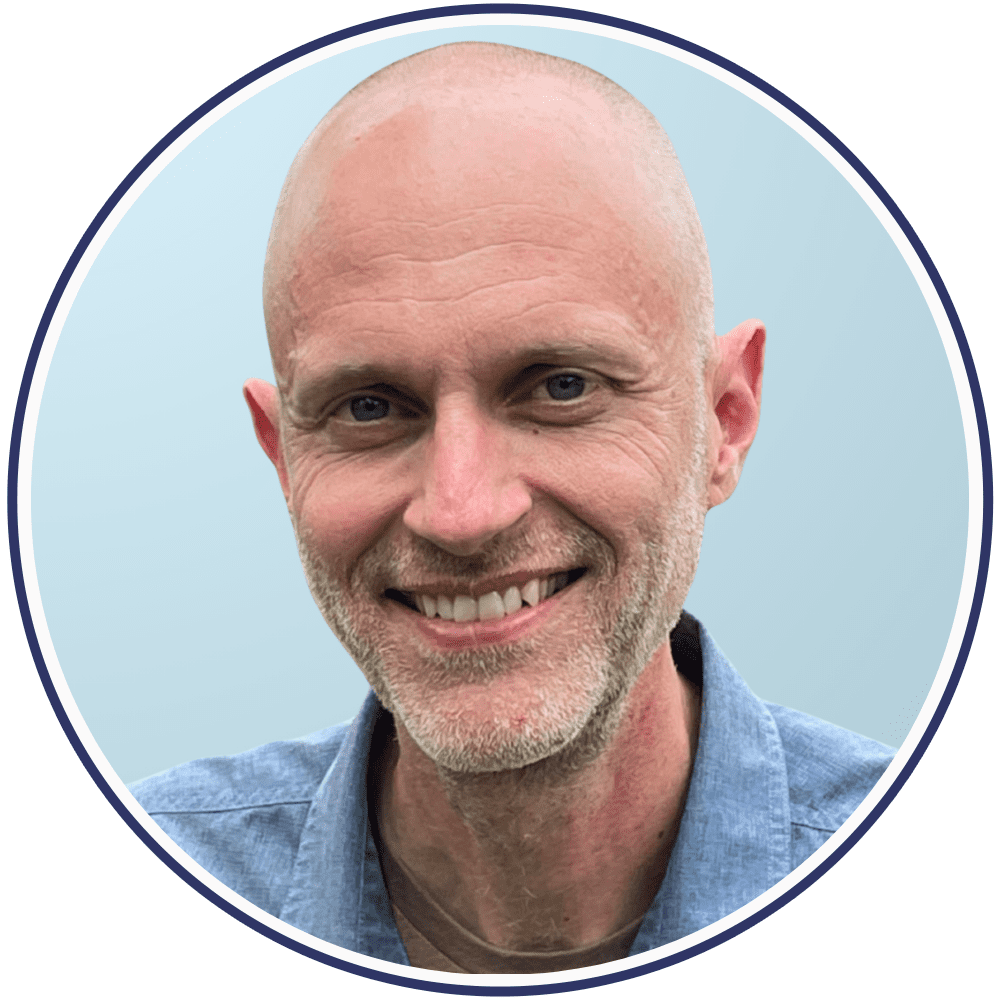
Hello everyone and welcome to The Upstream Leader. My name’s Jeremy Clopton. Glad to have you with us for today’s episode. We’re going to talk to another individual that has what I’m going to consider to be a little bit of a unique journey to public accounting. As you all know, I really believe that people will be our differentiator and competitive advantage, and they’re the thing that will always set us apart in our profession, no matter how much technology we have. And that means we probably need some folks that are not accountants to really help us become great advisors. So for that conversation today, I have with me John Taylor, a consulting specialist at Elliott, Robinson & Company. John, great to have you.
Thanks for having me.
So we’re going to jump into this. I’ve known John since I was in college. He was a professor at the university that I was at, and also one of our Students in Free Enterprise fellows that was leading the organization. I don’t know John, that I ever expected our paths to cross in public accounting because at the time you were a professor of German at the university. So before we get into the journey from German professor to public accounting, I’d love to know, how did you become the leader that you are today?
Well, since I was a college professor, I think I would start by even just like, I’d probably beg that question. I’m not sure that I would necessarily characterize myself as a leader. What I have tried to do, I guess through my career, is lead by some kind of example. That has usually taken the form of trying to see what was missing and what I was doing, and then trying to do what I needed to do in order to fill that gap. So, you know, as you said, I started in a very different field from the one that I’m in today, and a lot of times the move from one thing to the next was a little bit about moving towards new opportunity just for the sake of seeing what that new opportunity might bring. But to another extent, it was always about kind of like just seeing what was out there, seeing what there was to learn, even if it wasn’t necessarily a gap that I identified up to that point, kind of seeing and then an opportunity to do something different. Also, the opportunity to like just fill a knowledge gap.
So, you know, fundamentally I’m a teacher, fundamentally, I like to learn, I like to spend time kind of learning a lot of different things, sometimes it drives my wife a little bonkers. But you know, where I think I lead to the extent that I do anything like that at all is in that area. I’m not a big kind of out there and in front of the group kind of leader, I’m not the kind of person who likes to spend a lot of time coming up with big, broad leadership theories or even trying to live by them. I kind of just like to like, on a day-to-day basis, make incremental progress towards, you know, a more kind of holistically fulfilling career by either identifying gaps or having gaps identified for me, and then doing what I can to fill those in the hopes that other people who may, you know, be kind of looking for something that they want to do might find at least some method behind that—or for people who find themselves really specialized in what they do and maybe a little constrained by it—the opportunity to, you know, not just maybe do just exactly the same thing for your entire career, and to, you know, from time to time maybe take a risk just to see what’s out there.
Well, I would definitely say that curiosity of what’s out there, that desire to learn, as I think back through what I know of where you’ve been. Of course, I don’t always know the why behind it. But that curiosity makes a lot of sense. If I recall correctly, you made the jump from German to the realm of entrepreneurialism. If I recall correctly, it was somewhat based on a trip to Germany by the students in the Free Enterprise Team at the university. Is that correct? If I recall, you went with us and that was kind of the first introduction that I had to you, is that, did that spark the curiosity a little bit more or was the curiosity into the business and entrepreneurial realm already sparked?
It wasn’t sparked at all. You know, my brother was the accounting major, I had always kind of steered clear of that area. So the idea that I might want to like get into business had never really played much of a role. The way it started is exactly as you’re describing it: the Students of Free Enterprise Team at Drury had won the national championship that year. They had the opportunity to go to Germany in the fall and one of the advisors, Robert Wyatt, needed to have somebody, or at least he felt he needed to have somebody who was there with the team who spoke German in case something came up, didn’t even have any particular concerns, I don’t think. I think he just felt that it would be good to have somebody who spoke German. So I went with them. I had a chance to spend some time with the team, spend some time with the two advisors, Robert and Charles Taylor, and when we got back, you know, I kind of figured that was about it. I told Robert, let me know if there’s anything else I can do. He kind of smiled and said, yep, we’ll let you know.
And about two weeks later he was emailing, giving me a call, asking me to come over and said, you know that everybody on the team really seemed to like you. That’s 80% of what faculty advisors do, it’s not for their subject matter knowledge or anything like that, it’s for their ability to interact with the students. And, you know, we kind of talked among ourselves about how unusual it might be to have a German professor be a faculty advisor for the team, but you know, if you’re interested, we’re interested, and kind of sent the invite. And so I joined the team and from there, that’s kind of how things started moving forward from there. So I was enjoying teaching German, there was a part of me that was beginning to realize that doing that year after year was going to be like, that was going to look a certain way. It wasn’t an unattractive career, but it also wasn’t, you know, one that had a lot of scope to it. So over time, you know, the opportunity presented itself to work a little bit more in a formal kind of professional capacity over at the business school. Took that, worked a little bit as the MBA director, spent some time as the director of the Entrepreneurship Center, got my MBA, then kind of moved over formally to the business school as someone who, I don’t want to say a business school professor so much as someone who was at that point able to teach a couple of management courses, a course in entrepreneurship. Then kind of formally moved from German to the business school, and that’s kind of how things began to take shape in the field of business.
Well, and I mean, as you said, it sounds like your love of learning and your natural curiosity to see what else is out there, what other opportunities, just played such a key role in making that a possibility. And I love that because so often in public accounting we talk so much about you need to become an expert, you need to become a specialist, and I know there are a lot of individuals that have a fear of that, that they’re almost going to be pigeonholed into a, I can only do this one thing. And I remember in my career when I got into data analytics, my managing partner saying, “Are you sure you want to be ’the tech guy?’” Now, this was of course before technology was what it is today. So there was still a question of will analytics and technology and all of that actually be a thing you can base a career on. Several years later, obviously we look back and would laugh at something like that, but at the time you don’t know. But it was that willingness to become an expert, but also have curiosity, that led me to where I am.
It sounds like you had a similar path. It was, I’m going to become an expert. I mean, you don’t get a PhD in German linguistics without desiring to become an expert in a given area. But then you had the curiosity to say, yeah, but there’s a lot of other things out here that could be really amazing to do. And then you talked about finding something that was fulfilling and holistic: I can’t help but think about your next step in your journey, which was, if I recall correctly, after the entrepreneurship center at Drury, you were the COO of Askenosie Chocolate, which is a chocolate company run by a former defense attorney, a criminal defense attorney at that, who also was looking for something more fulfilling and a bit more holistic than just what he was an expert in. I’d love to know how that experience over the eight or so years that you were there, how that shaped you into, you know, how you think about business, how you lead, how you kept that curiosity, because I would imagine that was a big jump as well from leading an entrepreneurship center at a university to being the chief operating officer for a chocolate company.
That was probably the biggest jump. I was 42 at the time, and Sean had reached out to me to see if I wanted to be the next COO. My wife and I talked about it a good deal and ultimately decided that, you know, when you’re 42 years old, you’re still young enough to make a huge career error and probably still recover, but hopefully old enough that you’ve got the experience at least to get off to a good start at it, and not to think that you know everything that there is to know about a job like that. The idea behind it, if I were to be brutally honest with myself about it, was that I had come to recognize a degree of imposter syndrome as a business school faculty that I don’t know that other business school faculty feel as strongly as I felt. When you’re a German professor, it’s kind of easy, you know, like, you know, you’re an imposter. Like there’s no doubt about it. You know, like if you’re an American who’s learned German and goes to Germany, you know that you’re an imposter and it’s okay. People are willing to work with you and it’s fine. Like the stakes aren’t particularly high. When you’re a business school professor who has nothing more than an MBA and a couple of part-time jobs back in high school and college to work with, the idea that you’re now in a position to talk about a lot of stuff that you’re also teaching to an extent is kind of silly.
So the opportunity to kind of get away from higher ed and to just like step out of it all, step away from the theory and the textbook and the, you know, kind of here’s how you do these things and into the world where, okay, well, if you think that’s how you do it, then go on out there and do it. See if you can pull it off. See if you can take the management theory, see if you can take the accounting, see if you can take everything that you’ve learned that’s all kind of theoretically sound in the confines of a classroom, and do it, see if you can actually do it. It’s a little like reading 20 books on parenting and then, okay, now do it. See if you can actually pull that off. And that’s what that was primarily, for me at least, all about. You know, there was also a chance to work for a cool company that does some cool stuff around the world and have the opportunity to meet different kinds of people. It was all about that as well. But primarily it was about finding some degree of balance between what I knew at a purely academic level and what I felt would be good to know on the ground in pure, day-to-day practice.
Hmm. So you essentially said, I’m feeling imposter syndrome, let’s just go do it, so that feeling goes away?
Either so the feeling goes away, or so that I know that it was an imposter syndrome. Like in other words, maybe I’d come back to all this, teaching it in exactly the same way and maybe, you know, it suddenly makes all the sense in the world, and the practical experience is one that matches perfectly up to everything that I’ve read, and now I’m not an imposter. I can say that what you’re going to read in this textbook is actually true, or what you’re going to read in this textbook is actually, you’re going to live it yourself, so you better read carefully. You know, just confirmation, or some chance to see whether there are some ways that people do things out there that are different and maybe not altogether for a bad reason.
And you had, I would expect, I mean, at least the founder of Askenosie Chocolate had what I would consider to be, perhaps, a similar journey to that industry that you did in the fact that the background had nothing to do with manufacturing or food or retail or anything like that. How did that help you either learn more, or did you find that there was just everyone there was more curious about how to approach things? Was it as textbook as you expected, or did the fact that multiple people came into that organization with such varied backgrounds, did that actually provide more of a learning lab through the business?
That’s a good question. I think everybody who ended up coming to the company, whether they were coming in from a part-time job and just looking to work at the factory, or coming from some degree program around town and having more of an office job or working with Sean, you can’t just drop what you’ve done in the past and kind of just start absorbing the way things are done as if the past never happened. So Sean was a lawyer; it would be fair to say that once you’ve been a lawyer, it’s a little hard to kind of stop being a lawyer. I was an academic; it would be fair to say that once you kind of thought about things in the way that an academic thinks, it’s hard to stop thinking like an academic. That was the case for all of us as we came in. We brought a lot of those different backgrounds to bear in what we did, and I think we learned a lot about one another’s fields, one another’s backgrounds, in kind of working through different issues.
What I learned in the process, especially in working with Sean, is kind of the importance of, I don’t want to say having a lawyer’s mindset because that’s not really what he was about, he wasn’t about, you know, he wanted to quit law, he didn’t want to be a lawyer anymore, so he didn’t like open a chocolate company to be the general counsel for a chocolate company. But you know, it’s hard to describe it exactly in a short time like this, but there’s a way of thinking kind of legally that also kind of intersects well with thinking strategically about things. It gave me a way of thinking about how a business as an entity that exists in an environment in which it’s competing against other companies that do the same thing, it’s trying to establish itself in a market, it’s working with and sometimes dealing with regulatory agencies or, you know, different levels of government. So in other words, what the company is trying to accomplish, it’s not trying to accomplish in a vacuum. It is constantly having to, you know, manage its resources in a way that allows it to create a good product as efficiently as possible while meeting all regulatory, legal requirements and from time to time also defending itself from, you know, outside forces that aren’t necessarily trying to like, destroy it, but who also have their own priorities and their own reasons for being that don’t all the time support what you’re trying to do.
I’m just trying to manage that entire company, which has its own internal dynamics, at the same time that you’re trying to manage the company as its own unit, its own entity in an external environment that has its own set of dynamics as well. So part of my job, not entirely, my job was more to kind of focus on the internal dynamics, but a lot of times the external world also kind of came knocking and I found myself working with Sean and Lauren, his daughter who was chief of marketing, to also kind of manage like, okay, while we’re dealing with this internal set of issues, how are we also going to kind of manage what the external world is, you know, kind of bearing down on us with here in a way that keeps the company, first and foremost, intact, and then secondly, successful in terms of how it’s perceived by the people who buy the chocolate as well as perceived, evaluated, and eventually judged to an extent by entities that have a job to evaluate the company.
Yeah. Very interesting. So blending the academic, the legal, just the various perspectives and mindsets sounds like a fascinating place to be able to learn and challenge yourself, and someone like you who loves to learn, who’s naturally curious, I’m sure that your curiosity was constantly piqued there. So we’ve made the journey from German professor, SIFE advisor, leading the Entrepreneurship Center at the university, COO of a global chocolate company, and then your curiosity says, let’s give public accounting a shot. Help me with the transition there. What were you looking to fill? What was the curiosity? What led you to our wonderful profession?
So if you take all of the internal and external forces and kind of limit the scope of all of that just to like accounting, forget all the food safety stuff and everything else for a second, just the accounting: One thing that I incredibly enjoyed about the job was seeing how—this is going to sound kind of pedestrian—how the internal bookkeeping of a company is made to intersect with public accounting. So how the internal world of, you’ve got a company, it’s got its systems, it relies on outside vendors for its sales, for its marketing, for its accounting, for its bookkeeping, for all of that, and that has to be built and designed to be some combination of as efficient but also as accurate as it can be. So, in other words, it’s trying to strike a balance here. We’re not going to be able to do things just exactly according to GAAP every single time. And sometimes it’s going to be because the system doesn’t allow us to do it that way. Kind of working in that field and then, you know, once a year, or not just once a year, but then like interacting with the accountant, especially when it came to, you know, around tax season. Getting a lot of questions, fielding a lot of inquiries about like, you know, what did you do here, what were you doing there. There’s always questions about fixed assets at the end of the year and so on.
Over time, there was kind of a notion, I guess, began to bubble up every now and then that I would guess that I’m probably not the only person who is contending—I don’t want to say “fighting this battle”—but contending with this reality that there’s this kind of big, wide world of accountancy out there that is being taught probably pretty similarly to the way that I would teach it when I was back at Drury, and then there are all these other smaller worlds called companies out there who are kind of doing their best to manage their finances and manage their bookkeeping and accounting in a way that works for them as best as they can do it, given the resources that they have. I sometimes, you know, kind of struggled a little bit with some of the ways that we were managing our bookkeeping internally, and then sometimes there were ways that I, you know, would sometimes get a little frustrated with, you know, the way that that would have to get put on the books for accounting reasons, at the level of GAAP. And over time I thought, you know, I wonder if other people are also kind of feeling that tension, you know, trying to strike the best balance between the efficiency of getting it done as quickly as possible versus the accuracy that GAAP requires.
So when this job presented itself, it wasn’t presented to me as, you know, you’re going to go back to the world of quasi-academia and be there to support people in their accounting needs and also from time to time maybe wag a finger or two about how they’re doing their stuff, but it also wasn’t presented as, don’t worry, you don’t have to follow GAAP, you don’t have to worry about any of that, you can just kind of help them get the stuff done. It was, I read positions like this as well, you probably have the academic background for it, but it’s also good that you have the practical experience to bring to bear because this job is going to require you to, first and foremost, have an understanding and some level of empathy for people who are trying to run a business and they’re trying to do the best that they can, and they may not be doing it exactly so, they may not be doing it exactly in conformance with GAAP. And sometimes it’s because they’re being a little lazy, but sometimes it’s because their system doesn’t allow them to, and sometimes they want to know how to do it better, which may not necessarily even mean doing it closer to GAAP. It may just mean that they just know that they’re kind of doing it an old way or it’s taking too long. And the job here is to kind of do a lot of stuff that sums up and ends up being kind of the product of everything that I’ve done up to this point in my life. So, you know, you’re going to be a little bit of a teacher, you’re going to have a little bit of the background, you’re going to need to use some of your background when you are a professor, but you’re also going to need to have the ability to work with people, probably more or less in the same way that you work with people when you are in private industry.
Very interesting.
It’s going to be good to be able to approach a client who’s looking for consulting help and not bookkeeping assistance. But first and foremost, not get in there and get real critical to start with. Like, okay, well how are you doing what you’re doing? I’m going to assume that you’ve been trying your best, so how are you trying your best? Let’s start there. And it’ll kind of work from there to see if there’s anything that we can do to get it more along the lines of what you’re looking for.
Yeah. And I would imagine that your background also makes it a lot easier to empathize when you’re working with the clients, that, hey, I get it. I’ve been there, I’ve done that, I’ve seen that, I’ve lived it. There is a path forward. We can talk to you about that. And what I love about it is you don’t have to be an accountant to care about your clients. You don’t have to be the world’s best tax accountant, you don’t have to be the best auditor. I mean, you don’t have to be an accountant, right? That’s not one of the degrees that you have. You have several, that’s not one of them. But what you do have is a desire to learn, a desire to teach, a desire to be compassionate, and the background that allows you to show up for people. To me, that’s one of the things that makes our profession so great, is you don’t have to just be a great accountant to be outstanding in this profession. Arguably, you really need to care about wanting to help people become better at what they do. It just so happens that that’s accounting and business.
Yeah. One thing that I’ve learned since I’ve gotten here is the extent to which somebody who does tax is doing tax for somebody for a range of reasons, either, you know, and it usually starts with like, “I just really like tax.” But there is usually some reason that basically amounts to, “I’m trying to help this person,” kind of lurking in the background. Either because they are not taking advantage of, you know, a deduction that they have every right to take, or, you know, because they’re potentially putting themselves in hot water and they want to get them out of the hot water before things get too hot. Even on the audit side, like my brother has been an auditor his entire life, and the one thing he never told me was that auditors kind of love it when they’re doing an audit and the client treats it less as like the big annual test that they’re taking, and can I pass and can I provide the documentation that I need, or else am I going to fail this audit, and more as something that, legally it’s not a consulting engagement, but to the extent that things are found that the auditor can point to and say like, I’m not going to sit here and tell you exactly how to do it, and I know this is potentially going to come off as like you’re doing it wrong, but here’s some areas in which you could, you know, substantially improve, and if you do, it’s not just that you get a better score in the test next year, it’s that you’re probably feeling a little bit better about your account before we even show up next year. And so I have not met an auditor here who enjoys going out and just telling people how they’re doing all their stuff wrong. The auditors I know here are the ones who sincerely like to identify areas where the companies and the clients that they’re working with could do things better.
Yeah. And you don’t have to have a degree to care. You just genuinely have to want to help people. And that’s where I believe, and why I wanted to explore your journey on the show here, is you can have a wide variety of backgrounds, and you can still have a great career in this profession because if you can come in with curiosity, a desire to learn, some experience to build it on, and an outside perspective that challenges people to help them get better, there is so much opportunity in this profession for that. Over our last few minutes here, I have one more question. So let’s fast forward 15 or 20 years: What has your curiosity then? How will you know you were successful as you go through the next 15 to 20 years of your career in following your curiosity and becoming the individual you want to become?
That’s a good question. I suspect it ends up going a little bit like this: I know that there are a lot of things that I still don’t know. I’ve got two kids right now who are in or getting ready to start college and they’re majoring in areas that I’ll never have anything close to the level of knowledge that they have in. But I think knowing that I’ve gotten to the point where I know that there’s a lot that I still don’t know, but that’s okay, because where I’ve landed has been part of a process that never felt too static, would be enough to represent some level of success in a career. You know, I’ve never really been one to have like a big master plan about things. So I’m not the kind of person who, like when I was 18 to 22, gave a lot of thought about exactly what is like, the set of goals, what are the markers and what’s the master plan for my career. It was built more around, you know, I’m going to do what I enjoy doing. If there’s an opportunity that presents itself to kind of expand some horizons or learn some new things or expand the scope of what I do that makes sense and wouldn’t ruin the career or ruin my livelihood, then I’m probably going to take it. As long as I never pass on that kind of an opportunity, then I think that would be the mark of success, because it’s less about getting to a specific point in the career than it is about knowing that the point that you’ve got to was reached, and being kind of consistent and holding true to the same process throughout. Which may mean that this job is the one that takes me all the way through to retirement, and that’s not something that’s too hard to imagine. Because what I’m learning here is that in a consultancy role, there’s a lot about accounting left to learn, and there’s also a lot about how business is done on the ground to learn. Something kind of intriguing about that.
Very good, John, I really appreciate that. As our listeners are thinking about your journey and maybe exploring theirs, any resources, books, podcasts, TED talks, anything that comes to mind that you think, you know what, this is something everyone should read regardless of what they’re doing in life?
The one book that helps me to process the process that I was just describing. You know, like, should I take this next step? Should I be considering a move? Should I be kind of thinking through not just how to do management, but also how to manage your personal affairs, your career as you move forward. There is a book whose author I can’t remember, unfortunately. But it had to do with thinking hats, the five thinking hats. It’s a way to kind of force your mind into a mode in which it kind of disciplines itself to ask, you know, what’s the best thing that could happen here, what’s the worst thing that could happen here, what are the facts on the ground, what’s my gut telling me, and so on. And it kind of allows you to process, you know, decision making when you don’t have a specified goal in mind for, you know, what you want to do and how you want to get there that I have found useful. I think everybody has kind of a default way of thinking about things, either kind of thinking out of their gut or they are kind of an optimist about things, or they tend to be too pessimistic about things, and when you’re making managerial decisions or you’re making life decisions, it’s good to kind of force yourself out of like your default way of thinking about the decision, and to be a little bit more balanced about that. So, you know, to avoid the mistake of the optimist or the mistake of the pessimist.
Yeah. I think I have found that, maybe Six Thinking Hats by Edward de Bono?
Yes. As I recall, hat number six isn’t necessarily a way of thinking, it’s kind of like the way of thinking about the five hats.
Okay, very good. So I will, we’ll put a link to that in the show notes and, if folks are just interested in learning more about talking with somebody as interesting as yourself, how can they get a hold of you?
I’m here at Elliott, Robinson at jtaylor@ercpa.com.
Awesome. John, thank you so much for joining us on the show today. I really appreciate the conversation and look forward to talking again soon.
You too, Jeremy. Thanks for having me.